
Private Label Products Wholesale: How Retailers Build Own-Brand Ranges Without Guessing Their Way Onto the Shelf
Aftab Ahmed
SwedeVital
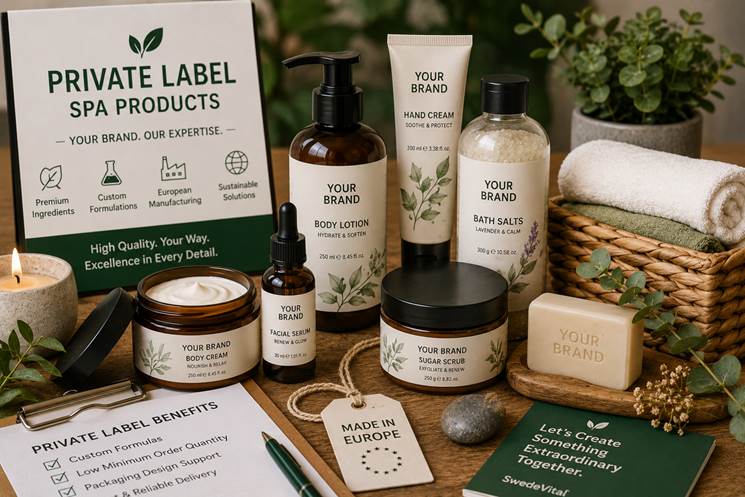
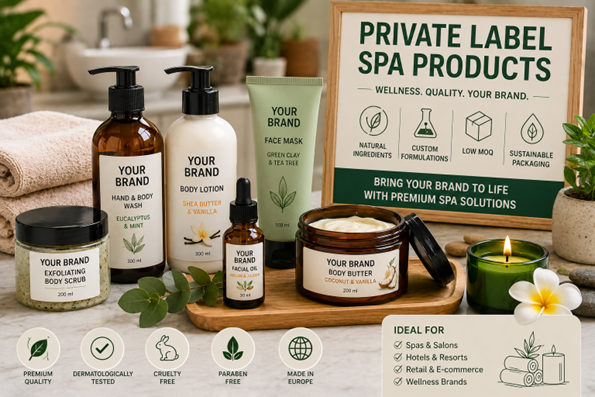
Figure 1. Private label product presentation: the kind of clean, brand-ready setup buyers expect before a product earns shelf space.
Quick Answer
Private label products wholesale are products made by a third-party manufacturer and sold under your own brand, often with custom packaging, selected formulas, and retail-ready supply. The best private label products are not simply cheap items with your logo on them. They are category-fit products with strong demand, clear positioning, reliable production, proper liability planning, and packaging that makes sense for the buyer standing in front of the shelf.
The private label shelf is having a main-character moment
Let’s be honest. Private label used to sound like the quiet cousin of “real brands.” You bought it because it was cheaper, not because you were emotionally attached to the packaging. But retail has grown up. Store brands, own-brand ranges, and wholesale private label products are no longer sitting in the corner hoping nobody notices them.
Now, private label products can be the thing customers come back for. That is great news for retailers, distributors, and wellness brands. It is also mildly terrifying, because suddenly everyone wants to launch a product line and half the internet says, “Just slap a label on it.” Please do not do that. A label is not a strategy. It is a sticker with ambition.
Current top-ranking pages around private label products mostly use guide and listicle formats. They explain what private label means, list the best private label products, compare categories, and discuss sourcing, cost, margins, and launch steps. This article follows that shape, but keeps the focus practical for retail and B2B buyers who need products that can actually survive the journey from idea to carton to shelf.
What private label products actually are
A private label product is made by a manufacturer but sold under another company’s brand. That company may be a retailer, distributor, e-commerce seller, pharmacy chain, hotel group, gym network, or wellness brand. The manufacturer handles production. The brand owner owns the customer relationship, product positioning, packaging story, and shelf experience.
This is why private label product manufacturers matter. A good partner does not just produce goods; they help you avoid launching a product that looks confident in a meeting and confused in real life. For SwedeVital, this connects naturally to Private Label support, European production, certified manufacturing, EU-compliant labeling, and retail-ready packaging for protein snacks and wellness products.
Private label category map: what fits your brand?
The search data is broad because buyers look for private label products across almost every imaginable aisle. Some categories belong directly in the SwedeVital universe, such as private label food products, private label diet products, private label keto products, private label weight loss products, functional snacks, protein bars, protein bites, and wellness products. Others, like private label cleaning products, private label pet products, private label skincare products, or private label grooming products, help show how wide the private label market has become.
| Category | Example keyword | Buyer logic | SwedeVital relevance |
| Food & wellness | private label food products, private label food products wholesale, private label food production | Strong fit for retailers seeking repeat-purchase products with shelf appeal. | Very high: this is closest to SwedeVital’s Private Label and Retail & Wholesale pathways. |
| Diet and lifestyle | private label diet products, private label keto products, private label weight loss products | Works when claims are careful, compliant, and customer-friendly. | High, especially when positioned around functional snacks and better-for-you products. |
| Beauty and personal care | private label skincare products, private label bath and body products, private label anti aging products | Strong margin potential, but packaging and trust are everything. | Adjacent category; useful for comparison and wider private-label buyer education. |
| Cleaning and home care | private label cleaning products, private label household cleaning products, private label kitchen products | Often bought for value, subscription, and recurring household demand. | Not core to SwedeVital, but useful to explain category selection. |
| Pet and niche ranges | private label pet products, private label dog products, pet products private label | Strong loyalty if quality, safety, and repeat usage are clear. | Not core, but shows why manufacturers and compliance matter. |
| Automotive and detailing | private label car detailing products, private label car wash products, private label automotive products | Niche, repeatable, and enthusiast-driven. | Not core, but helps explain why not every keyword belongs to every brand. |
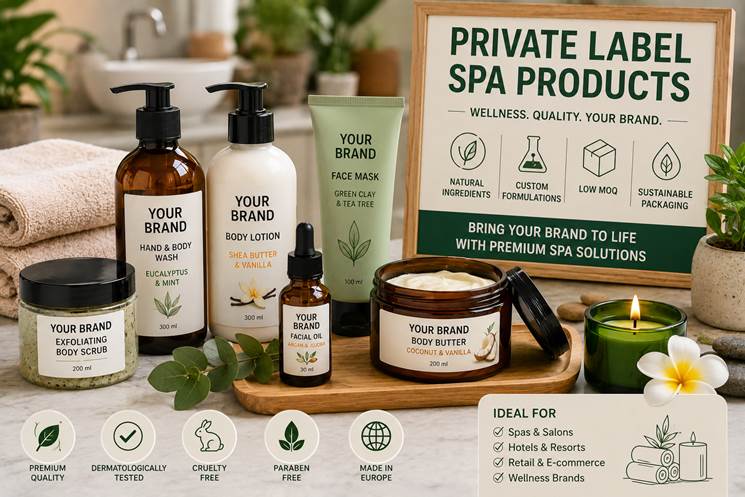
Figure 2. Private label spa and wellness products: a reminder that own-brand opportunities stretch far beyond one product category.
The problem: too many product ideas, not enough product discipline
One of the easiest mistakes in selling private label products is treating every category like it deserves equal attention. It does not. Private label spa products might be perfect for a wellness resort. Private label cleaning products might work for a household brand. Private label pet care products might make sense for a pet retailer. But if your business is a food, snack, supplement, or wellness retail buyer, your best move is usually to start close to your natural customer demand.
That means private label food products, private label products wholesale, wholesale private label products, and private label product sources should be filtered through a simple question: Can this product make sense for the customer we already serve? If the answer is no, it may be a fun idea, but so is buying a kayak because it was 30% off. Fun does not always mean useful.
The solution: start with the shelf, not the logo
I believe the best private label products start with shelf logic. Before packaging design, before flavour names, before someone says “premium” for the tenth time in one meeting, look at the buyer journey. Who sees the product? Where is it placed? How fast do they understand it? Why would they choose it over a national brand or another private label range?
SwedeVital’s Private Label page follows this logic by moving from discovery and product brief to formula selection, sample development, packaging and label compliance, production, quality control, and launch support. That matters because private label productions are not just creative projects. They are operational projects wearing nice packaging.
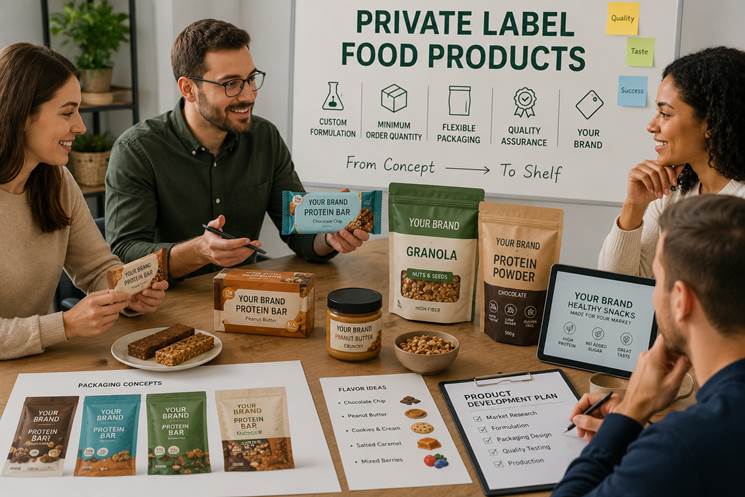
Figure 3. Private label food product development: packaging, flavour, formulation, and launch planning all happening before the shelf gets involved.
Private label products cost savings strategies
Private label products cost savings strategies usually come from smarter sourcing, better MOQ planning, simplified packaging, fewer middle layers, and products designed for repeat demand. The goal is not to make the cheapest item in the room. The goal is to make the best-value item customers trust enough to buy again.
This is where the private label products discovery stage matters. Discovery is where you decide whether your range should be premium, affordable, organic, clean-label, high-protein, vegan, family-friendly, or retail-ready for specific channels. Skip discovery and you may save time at the start, then pay for it later in unsold cartons. Nothing says “learning experience” like a warehouse full of products nobody asked for.
| Cost lever | How it helps | Risk if ignored | Buyer-friendly move |
| MOQ planning | Controls cash flow and reduces overstock risk. | Too much inventory too early. | Start with flexible minimums before scaling. |
| Packaging formats | Keeps production and logistics efficient. | Beautiful but expensive packaging that hurts margin. | Choose shelf-ready, barcode-ready packaging first. |
| Formula selection | Uses proven base recipes where appropriate. | Over-customizing before demand is known. | Test ready-made or semi-custom formats before going fully custom. |
| Supplier consolidation | Reduces coordination and quality-control friction. | Too many vendors, too many surprises. | Use one partner for formulation, production, packaging, and compliance where possible. |
| Category focus | Builds a range customers understand. | A random-looking product portfolio. | Launch related products that tell one clear retail story. |
What about skincare, grooming, cleaning, and car care keywords?
The uploaded keyword list includes private label products skincare, private label organic skin care products, private label black hair care products, private label black hair products, private label hair growth products, private label hair products for ethnic hair, private label for men’s hair care products, private label barber products, private label beard products, private label men’s grooming products, private label mens grooming products, private label nail products, private label tanning products, private label esthetician products, private label aromatherapy products, private label oral care products, and syndet soap private label production.
Those are real categories, but they require their own safety, claims, packaging, and product liability approach. The same applies to private label cleaning product manufacturers, private label car care products, private label car cleaning products, private label car detailing products, private label auto detailing products, and private label detailing products. The lesson for a wellness buyer is simple: category choice is not decoration. It decides your compliance route, supplier search, risk profile, and marketing language.
Food and wellness are a cleaner fit for SwedeVital
For SwedeVital readers, the strongest fit is private label food products, private label diet products, private label keto products, private label weight loss products, private label food production, private label products wholesale, private label food products wholesale, and wholesale private label products. These connect more naturally to protein snacks, functional snacks, retail-ready packaging, and certified European production.
This is also where best private label products and best private label products UK supermarkets 2025 become useful search angles. Supermarkets and retailers are not just chasing any product. They are chasing products that support margin, loyalty, repeat purchase, and trust. Top rated private label products UK searches show that buyers and shoppers are watching quality, not only price.
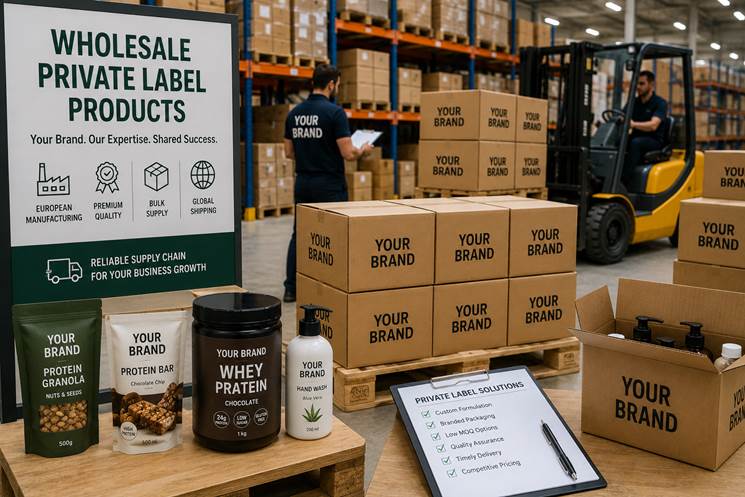
Figure 4. Wholesale private label products need more than nice packaging; reliable supply, cartons, and delivery systems matter too.
Wholesale private label products need operational strength
A product can look amazing on a desk and still fail in a warehouse. That is why private label wholesale products need logistics behind them: cartons, stock planning, barcodes, specification sheets, documentation, delivery timelines, and reorder reliability.
SwedeVital’s Retail & Wholesale pathway speaks to this part of the buyer journey. It is not only about launching your own brand. It is also about getting products ready for retailers, distributors, gyms, hotels, cafés, e-commerce, and wholesale channels. A good private-label partner should make the shelf feel closer, not farther away.
Product liability, insurance, and the boring stuff that saves brands later
Let’s switch to serious face for a moment. Questions like who covers private label brands for product liability and affordable insurance for private-label products are not side issues. They are grown-up business questions. Nobody wants to think about liability while choosing packaging colours, but ignoring it is how brands accidentally build a product line on vibes and hope.
Brands should clarify responsibilities around manufacturing standards, documentation, ingredient claims, product testing, label compliance, and insurance coverage. If a foreign country’s production of private label goods is involved, import rules, documentation, and regulatory expectations become even more important. This is one reason EU-native supply, traceability, and certified manufacturing can be strong advantages for European wellness buyers.
Search intent can get weird, so your strategy should not
Some keywords are oddly specific. For example, what product was one of Kroger’s first private labeled items is a history-style query, while private label products California, private label bag products, private label intimate products, private label hemp products, and private label detox products point to different buyer intent, regulatory environments, and consumer expectations. Jetpack-level chaos, honestly. But the bigger lesson is useful: not every private label keyword should become your next product line.
A brand should use keyword research to understand demand, not to chase every shiny phrase. The strongest private label range is focused enough to make sense and flexible enough to scale. That is a better strategy than building a catalogue that looks like it was assembled during a power outage.
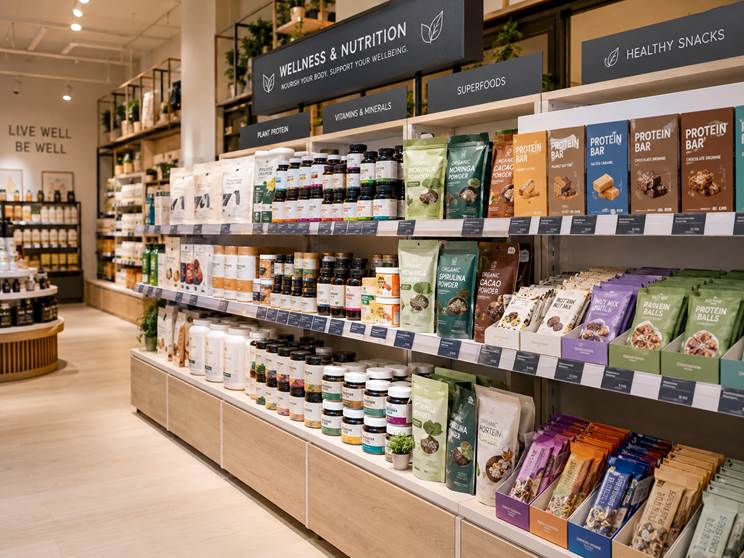
Figure 5. Range review and buyer discussion: the practical middle ground between idea, production, packaging, and retail launch.
Why SwedeVital is a logical next step for food and wellness private label
SwedeVital is positioned as a European B2B health and wellness supplier for brands, retailers, and distributors. Its Private Label offer supports custom recipes, branded packaging, EU label compliance, flexible MOQ from 500 units, and a 6–8 week launch path. Its Retail & Wholesale pathway supports shelf-ready products, EU labelling and barcodes, scalable volumes, and distributor-friendly supply.
For a buyer interested in selling private label products, this creates two practical paths. You can start with a private label range if you already know your market, or begin with retail-ready products and move into a private-label conversation once demand is clearer. That is a more sensible route than trying to build the whole empire on day one with a logo, a dream, and one slightly nervous spreadsheet.
FAQ
What are private label products?
Private label products are goods manufactured by one company and sold under another company’s brand. The brand owner controls the positioning, packaging, and customer relationship, while the manufacturer handles production.
What are the best private label products to sell?
The best private label products depend on your audience, supply chain, margin goals, and compliance requirements. Food, wellness, skincare, grooming, cleaning, and pet products are common categories, but not every category fits every brand.
What is the difference between private label and white label?
Private label usually allows more brand-specific control over packaging, formula, positioning, or specifications. White label often means a ready-made product that multiple sellers can brand as their own.
Are private label products wholesale good for retailers?
Yes, if the product has clear demand, solid margins, reliable supply, and good packaging. For retailers, the strongest private label products wholesale strategy usually starts with category fit and repeat purchase potential.
How do private label product manufacturers help?
Private label product manufacturers can support formulation, sampling, production, packaging, label compliance, documentation, and delivery. The better partners reduce operational risk instead of simply producing units.
Should new brands start with private label food products?
They can, especially if their audience already buys food, wellness, snacks, or functional products. A focused private label food products launch is usually stronger than a scattered multi-category launch.
Do private label products need insurance?
Yes, brands should review product liability and insurance needs before selling private label products. The exact coverage depends on category, market, claims, ingredients, and distribution model.
How does SwedeVital fit into private label products?
SwedeVital is most relevant for food, snack, functional food, protein snack, and wellness-related private label products. It supports European production, certified manufacturing, packaging, compliance, and retail-ready supply.
People Also Read
For more practical guides on retail-ready snacks, private label products, wholesale sourcing, and wellness brand building, explore the remaining SwedeVitalblog content at swedevital.com/en/blog.
- Supplement Manufacturing for Wellness Brands: How to Choose Capsules, Gummies, Packaging, and the Right Partner
- From Bakery Line to Retail Shelf: How Protein-Enriched Snacks Win Modern Buyers
- Good Protein Snacks for Retail: How to Build a High-Protein Shelf Customers Actually Buy From
- Wholesale Healthy Snacks for Retail: How to Stock Better Products Without Turning the Shelf Into a Random Wellness Garage Sale
- Wholesale Health Products for Retail: How to Stock Better Wellness Products Without Turning Your Shelf Into a Guessing Game
- Private Label Functional Food for Retail: How to Build Shelf-Ready Snacks Customers Actually Buy
- Wholesale Protein Bars: How Retailers Can Stock Healthy Snacks Without Turning the Shelf Into a Protein Brick Wall
- Private Label Manufacturers: How to Choose the Right Partner for Protein Bars, Functional Food, and Supplements
- Protein Snacks Wholesale: How to Buy Better Snacks in Bulk Without Filling Your Store With Boring Bars
- Explore the full SwedeVital Health & Wellness Blog
Final thought
Private label products can be a smart growth move, but only when the product, category, supplier, packaging, compliance, and shelf story all work together. Start with the customer. Build around the shelf. Choose a partner who can help the idea survive real-world retail. That sounds less dramatic than “launch everything immediately,” but it is usually how the good brands stay standing after the first excitement wears off.