
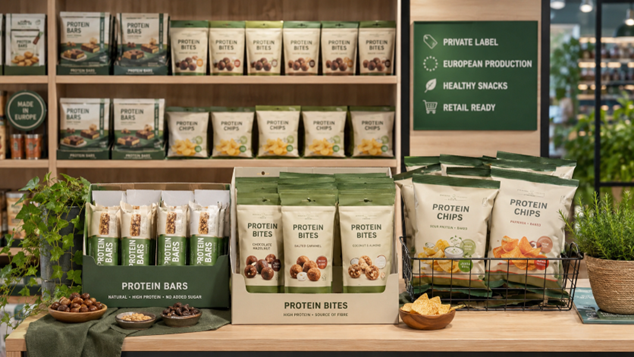
Wholesale Protein Bars: How Retailers Can Stock Healthy Snacks Without Turning the Shelf Into a Protein Brick Wall
Aftab Ahmed
SwedeVital
Direct answer: Wholesale protein bars are best bought by retailers when the product has strong shelf appeal, clear nutrition claims, reliable supply, good shelf life, barcode-ready packaging, and a price structure that still leaves room for margin. The smartest buyers do not only ask, “Where can I buy protein bars wholesale?” They ask, “Will this snack sell again after the first curious customer tries it?”
That second question matters. Because buying snacks is easy. Buying snacks that do not sit on the shelf like a gym membership in February is the real game.
Protein bars used to feel like something only serious fitness people bought. You know the type. Big water bottle. Meal prep bag. Somehow always wearing shoes that look ready for a hill sprint. Now the category is wider. Retail customers want convenient, better-for-you snacks they can carry to work, school, travel, training, or the 4 p.m. “I need something before I eat my own keyboard” moment.
For retailers, cafés, gyms, hotel shops, distributors, and wholesale buyers, this creates a strong opportunity. But it also creates a small problem: the market is crowded. There are protein bars, protein bites, protein chips, low-sugar snacks, vegan snacks, kids’ lunchbox snacks, and enough “high protein” labels to make a supermarket aisle look like it joined a fitness challenge.
This guide keeps it practical. We will look at what top wholesale pages are doing, what retailers should check before ordering, how to think about branded searches like Gatorade protein bars wholesale, Pure Protein bars wholesale, and Barebells protein bars wholesale, and where a retail-ready European supplier can fit into the buying journey without making the whole thing feel like a sales brochure wearing perfume.
What the Top Ranking Wholesale Pages Have in Common
The current ranking pages for wholesale protein bars are mostly not long editorial blogs. They are category or supplier pages. That is useful because it tells us what buyers actually want when they search this keyword: product options, bulk formats, pricing access, filters, brand variety, and a clear way to order or apply for wholesale access.
The best-performing pages generally use this structure:
- A direct category headline such as “Protein Bars in Bulk” or “Wholesale Protein Bar for Your Store.”
- A product grid or category structure, often sorted by popularity, price, brand, or format.
- Clear wholesale positioning for gyms, vending, retailers, cafés, and other business buyers.
- Filters or product groupings such as vegan, keto, low sugar, organic, protein snacks, bars, cookies, chips, and sports nutrition.
- A simple CTA such as sign up, apply, log in for wholesale pricing, order samples, or request catalogue.
So instead of writing a dreamy blog that floats around the topic like a confused balloon, this article follows the buyer-guide format: direct answer first, practical tables, product selection advice, retail use cases, supplier checklist, internal links, and FAQs.
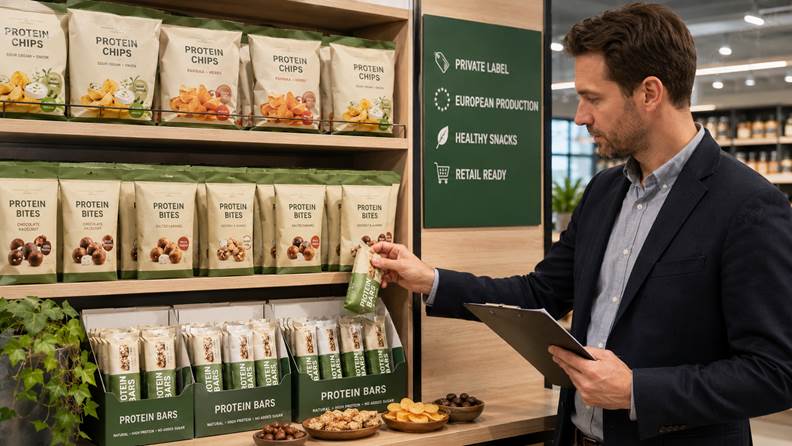
Figure 2. A retail buyer reviewing protein bars, bites, and chips before adding them to an assortment.
Why Wholesale Protein Bars Work for Retail
Wholesale protein bars work in retail because they combine convenience, function, and impulse purchase. That is a tidy little trio. Like a boy band, but with fewer questionable haircuts.
Customers understand protein. They may not know every ingredient on the label, but they understand the promise: “This snack should keep me fuller than a normal chocolate bar.” That makes protein bars useful in several retail environments:
- Gyms and sports clubs where post-workout snacking feels natural.
- Convenience stores where customers need quick food between errands.
- Cafés where a bar can sit beside coffee as a better snack option.
- Hotels and hospitality spaces where guests want portable food.
- Health stores and supermarkets where functional snacks already have shelf context.
- Online retailers and subscription boxes where variety packs can drive repeat orders.
The trick is not simply to fill a shelf with bars. The trick is to build an assortment that makes sense for your actual customers.
Wholesale Protein Bars vs Protein Snacks: What Should Retailers Stock?
Protein bars are popular, but they are not the only option. Retail buyers should think in terms of a snack range, not a single product type. A shelf with only protein bars can work, but a shelf with bars, bites, chips, and functional snacks gives customers more reasons to stop.
| Product Type | Best For | Retail Strength | Watch Before Ordering |
| Protein bars | Gyms, cafés, supermarkets, vending, convenience stores | Familiar, easy to explain, strong search demand | Taste, sugar level, bar texture, price per unit |
| Protein bites | Checkout counters, cafés, office snacks, premium shelves | Smaller portion, easy trial, strong snack appeal | Packaging size, resealability, flavour variety |
| Protein chips | Retail shelves, convenience, lunch snacks, savoury customers | Competes with regular chips but adds a functional angle | Crunch, seasoning, breakage during transport |
| Functional snacks | Health stores, wellness retailers, online bundles | Can support vegan, gluten-free, clean-label, or added-benefit positioning | Claims, certifications, ingredient clarity |
If your audience is fitness-focused, start with bars and bites. If your audience is mainstream retail, add savoury protein chips or lighter functional snacks. Not everyone wants a chocolate-coated protein brick at 11 a.m. Some people just want crunch. Respect the crunch.
What to Check Before You Buy Protein Bars Wholesale
When you buy protein bars wholesale, price matters. Of course it does. Margins do not grow on trees, although if they did, every retailer would suddenly become a gardener. But price is only one part of the decision.
Use this checklist before placing a wholesale order:
- Shelf life: Make sure the product has enough remaining shelf life for your sales speed.
- MOQ: Check minimum order quantity per SKU, per flavour, and per case.
- Lead time: Confirm how long it takes from order to delivery, especially for repeat stock.
- Packaging: Look for shelf-ready packaging, barcode readiness, clear product claims, and clean design.
- Certifications: Vegan, gluten-free, organic, Halal, Kosher, IFS, BRC, GMP, or other certifications may matter depending on your channel.
- Taste and texture: If the sample tastes like regret wrapped in foil, do not expect customer loyalty.
- Margin: Calculate unit cost, retail price, VAT/tax considerations, shipping, and expected markdown risk.
- Support material: Ask for spec sheets, product catalogue, storage terms, and product images for online listings.
Retail Buyer Checklist Table
| Question | Why It Matters | Good Sign |
| Can I test samples first? | Avoids ordering based on packaging alone. Packaging can flirt. Taste tells the truth. | Supplier offers sample packs or starter orders. |
| Are products barcode and EU-label ready? | Retailers need products that can go on shelf without extra drama. | Barcode, ingredients, allergens, nutrition and language support are available. |
| Can I reorder consistently? | A bestseller that disappears is a tiny tragedy. | Clear lead times and scalable supply. |
| Do claims match documentation? | Retailers need compliance confidence. | Spec sheets and certification details are available. |
| Is the range flexible? | Different stores need different snack mixes. | Bars, bites, chips, and functional snacks are available. |
Cheap Snacks to Buy in Bulk: When “Cheap” Helps and When It Hurts
The keyword cheap snacks to buy in bulk has strong intent. Buyers want value, and that is completely fair. But cheap snacks can be tricky. A cheap product that customers ignore is not cheap. It is just inventory wearing a disappointed face.
Better wording for retail buying is “best value snacks.” That means the snack has a fair unit cost, but also decent demand, repeat purchase potential, attractive packaging, and manageable expiry risk.
| Buying Goal | Risk if You Only Chase Low Price | Smarter Retail Move |
| Lowest unit cost | Weak taste or packaging can slow sell-through. | Compare price with expected repeat purchase. |
| High margin | High margin means nothing if product does not move. | Test smaller quantities first. |
| Fast promotion | Discount-only buyers may not become loyal customers. | Use bundles, displays, and mixed snack ranges. |
| Bulk order savings | Too much stock can create expiry pressure. | Order based on realistic weekly sales volume. |
If you are stocking for families, the search term healthy kid snacks to buy deserves extra care. Protein snacks can be useful for busy households, but retailers should avoid lazy “healthy” claims. Check sugar, allergens, portion size, ingredient quality, and age suitability. Parents read labels. Sometimes more closely than they read school emails. Which is saying something.
Brand Searches: Gatorade, Pure Protein, Barebells, and What They Tell Retailers
Searches such as gatorade protein bars wholesale, pure protein bars wholesale, and barebells protein bars wholesale show that buyers often begin with known brands. This is normal. Familiar names reduce perceived risk.
But for retailers, branded demand also creates a decision point. Do you stock only known brands, or do you build a more differentiated healthy snack range?
Known brands can bring recognition. Newer or specialist products can bring discovery, exclusivity, better margins, and stronger shelf storytelling. A smart shelf can include both: familiar anchors plus interesting retail-ready alternatives.
That is especially useful in Europe, where buyers may care about EU compliance, certified production, local distribution, and product documentation. The label is not just decoration. It is the tiny legal newspaper attached to your snack.
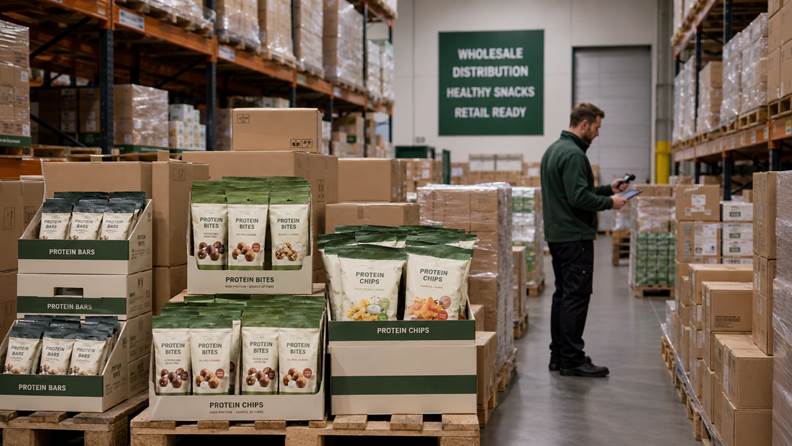
Figure 3. Wholesale distribution setup for scalable snack supply across retail channels.
How to Build a Retail-Ready Protein Snack Assortment
A good wholesale protein bar order is not just “one flavour, many boxes.” That can work if the product is already proven, but for a new retail test, variety is safer.
Start with a small range that gives customers clear choices:
- One chocolate or indulgent protein bar for mainstream appeal.
- One lighter or clean-label bar for health-focused customers.
- One protein bite or ball format for portion-friendly snacking.
- One savoury protein snack such as chips or puffs.
- One vegan, gluten-free, or low-sugar option if your customer base values it.
This lets the shelf answer different buying moods. Some people want sweet. Some want savoury. Some want “healthy but not sad.” That last category is larger than most spreadsheets admit.
Sample Starter Assortment for Retailers
| Shelf Role | Product Example | Customer Need | Suggested Test Logic |
| Impulse snack | Protein bites | Small treat, quick energy, lower commitment | Place near checkout, coffee, or gym counter. |
| Core functional snack | Wholesale protein bars | Filling, familiar, easy to carry | Test 2-3 flavours before expanding. |
| Savoury alternative | Protein chips | Crunchy snack with better-for-you angle | Place beside regular chips or lunch items. |
| Premium wellness option | Functional snacks | Clean-label or added-benefit audience | Use shelf talkers or short product notes. |
Where SwedeVital Fits for Retail and Wholesale Buyers
For European retailers and distributors, the practical question is not only “Which product is trendy?” It is also “Can the supplier support retailprivat properly?”
SwedeVital positions itself as a B2B protein snack supplier for Europe, helping brands, retailers, and distributors bring protein snacks, functional foods, and wellness products to market through European production, certified manufacturing, and retail-ready supply. Its site highlights protein bites, protein chips, protein bars, and functional snacks, with retail-ready packaging, EU labelling, barcodes, distributor pricing, and product catalogue support for wholesale buyers.
For readers comparing suppliers, this is the quiet but important part. A snack does not become retail-ready because someone printed “premium” on the pack. It becomes retail-ready when the product, label, packaging, documentation, supply chain, and reorder process all behave like grown-ups.
Useful SwedeVital pages for buyers: Retail & Wholesale | Private Label | Blog | Become a Partner
Retailers that want ready-made products can begin with the retail and wholesale route. Brands that want their own packaging or product concept can explore the private label route. Same snack universe. Different launch path.
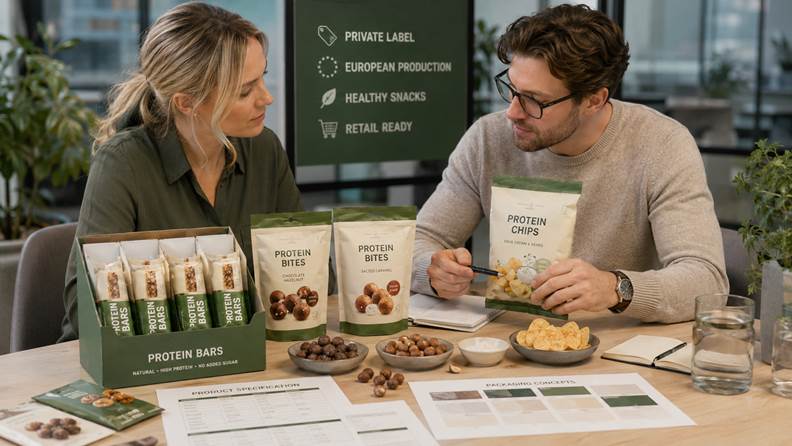
Figure 4. Product selection and packaging review for retail-ready snack ranges.
Wholesale Protein Bars for Different Retail Channels
Not every retailer should buy the same snack range. A gym and a hotel lobby do not have the same customer mood. One customer just trained legs. The other forgot breakfast and is pretending the minibar is a responsible life choice.
| Channel | Best Products | Buyer Priority | Recommended Content Angle |
| Gyms & sports clubs | Protein bars, bites, low-sugar options | Post-workout convenience and taste | High protein, quick snack, easy counter display. |
| Cafés & food service | Protein bites, bars, functional snacks | Snack with coffee, small treat, premium feel | Better snack beside coffee without looking too “diet.” |
| Convenience stores | Bars, chips, puffs, mixed cases | Fast grab-and-go sales | Shelf-ready packaging and clear claims. |
| Hotels & hospitality | Bars, bites, premium snacks | Portable guest snacks and minibar fit | Clean packaging, shelf life, compact formats. |
| Distributors | Full range, cartons, scalable SKUs | Repeat supply and margin structure | Catalogue, specs, MOQ, delivery terms. |
| Online stores | Bundles, variety packs, niche snacks | Images, descriptions, repeat purchases | Mixed boxes, product storytelling, SEO pages. |
The biggest mistake is ordering based only on what you personally like. Your snack preferences are important, yes. But they are not the entire customer base. Unless your store only sells to you, which would make inventory planning very peaceful and very bankrupt.
How to Compare Wholesale Suppliers
A good wholesale supplier should reduce friction. If every question needs six follow-up emails, three calendar reminders, and a small emotional recovery walk, that is a warning sign.
Before choosing where to buy protein bars wholesale, compare suppliers using this simple model:
- Product fit: Does the supplier offer products that match your audience?
- Retail readiness: Are the products packaged, labelled, and documented for retail?
- Commercial fit: Are MOQ, pricing, lead time, and case sizes realistic for your business?
- Support: Can they provide product catalogue, images, specs, and samples?
- Scalability: Can they grow with you if the product sells well?
- Compliance: Are certifications and claims clear and verifiable?
The “Retail Shelf Test”
Here is a simple test. Imagine the product sitting on your actual shelf. Not in a perfect product photo. Not in a pitch deck. On your shelf, under normal lighting, next to competing snacks.
Then ask:
- Can the customer understand it in three seconds?
- Does the packaging make the product feel trustworthy?
- Is the flavour easy to understand?
- Is the price point realistic beside alternatives?
- Would someone buy it again, not just once?
- Can staff explain it without needing a nutrition degree?
If the answer is mostly yes, you may have a product worth testing. If the answer is mostly no, the shelf may politely reject it. Shelves are quiet, but they are honest.
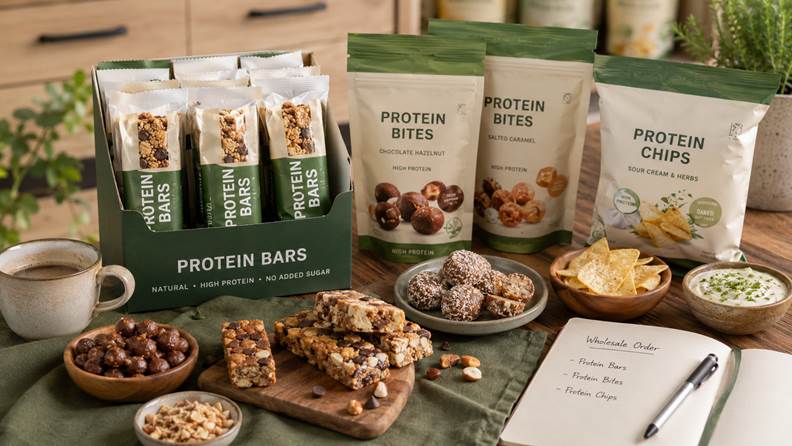
Figure 5. Protein bars, bites, and chips shown as a practical wholesale order mix.
Final Thoughts: Buy Snacks That Can Actually Move
Wholesale protein bars can be a strong retail category, but only when buyers treat them as a commercial decision, not just a trend. The best approach is to balance product quality, pricing, packaging, supply reliability, and customer fit.
Use wholesale protein bars as the entry point. Then build around them with protein bites, protein chips, functional snacks, and retail-ready products that match your store’s audience.
Because in the end, the best snack is not the one with the loudest claim. It is the one the customer picks up, understands, enjoys, and buys again.
That is the shelf moment everyone is actually chasing.
FAQ: Wholesale Protein Bars and Retail Snack Buying
What are wholesale protein bars?
Wholesale protein bars are protein bars purchased in bulk or trade quantities by retailers, gyms, cafés, distributors, vending operators, hotels, and other business buyers for resale or commercial use.
Where can I buy protein bars wholesale?
You can buy protein bars wholesale through distributors, wholesale marketplaces, direct brand programs, specialist sports nutrition suppliers, or retail-ready B2B snack suppliers. For European retail and distribution, buyers should check product documentation, shelf life, MOQ, and delivery terms before ordering.
Are protein bars good for retail stores?
Yes, protein bars can work well in retail stores because they are portable, familiar, and easy for customers to understand. They perform especially well when displayed near checkout counters, gym counters, coffee areas, convenience aisles, and wellness sections.
What is the difference between protein bars and protein bites?
Protein bars are usually larger, more filling snack formats. Protein bites are smaller, portion-friendly snacks that can feel easier to try and are often useful for impulse areas, cafés, office snacks, and premium snack shelves.
What should I check before buying cheap snacks in bulk?
Check shelf life, packaging quality, unit cost, expected margin, taste, allergens, storage needs, and whether the product fits your customer base. Cheap is only helpful if the product sells.
Can I stock branded products like Gatorade, Pure Protein, or Barebells wholesale?
Some buyers search for Gatorade protein bars wholesale, Pure Protein bars wholesale, or Barebells protein bars wholesale because these brands are familiar. Availability depends on region, distributor agreements, and supplier access. Retailers can also test specialist or European retail-ready alternatives to create a more differentiated shelf.
What healthy kid snacks should retailers consider?
Retailers should choose healthy kid snacks carefully by checking sugar content, allergens, portion size, ingredient quality, and packaging clarity. Not every high-protein snack is automatically suitable for children, so product documentation matters.
What makes a protein snack retail-ready?
A retail-ready protein snack should have shelf-ready packaging, barcode readiness, compliant labels, clear product claims, stable shelf life, product specifications, and reliable supply support.
How do retailers choose the right wholesale snack supplier?
Retailers should compare MOQ, lead time, product range, certifications, samples, wholesale pricing, packaging quality, reorder reliability, and support materials such as catalogues and spec sheets.
Should I buy only protein bars or build a wider snack range?
A wider snack range is often better for testing demand. Protein bars can be the core item, while protein bites, chips, and functional snacks help reach different customer moods and buying occasions.